


Why Israel is targeting bridges over Litani
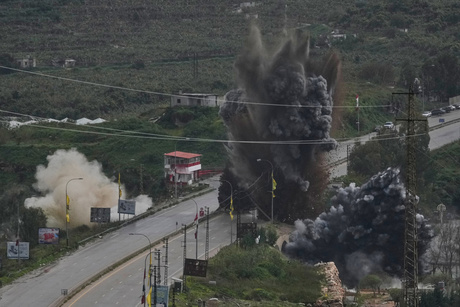
As it engages in heated battles with Hezbollah in a number of Lebanese border villages, Israel has bombed at least five of the six principal bridges across a river dividing the country's south.
Military experts agree the strikes are an attempt to cut off the region south of the Litani river from the rest of Lebanon, but are divided on whether the move will change the course of the fighting.
It is a familiar strategy: in an earlier 2006 war between Hezbollah and Israel, Israel struck 97 bridges and overpasses across the country, according to government data, including in areas far removed from the battlefield.
Many of the bridges now being struck -- among them one on Lebanon's main highway linking major cities across the country -- were rebuilt after that war using donor funds.
The bombing of the bridges, including another smaller one on Monday, adds to widespread fears in Lebanon that Israel intends to permanently depopulate the region south of the Litani.
- 'Significant impact' -
The Lebanese government and military have taken pains to stay out of the war, but Israeli attacks on state infrastructure like bridges and an electrical plant, and the killing of army troops, is causing strain.
President Joseph Aoun called the bridge attacks a "flagrant violation of Lebanon's sovereignty", and "an attempt to sever the geographical link between the area south of the Litani and the rest of Lebanon's territory".
Israeli Defense Minister Israel Katz said the army was ordered "to immediately destroy all the bridges over the Litani River that are used for terrorist activity, in order to prevent Hezbollah terrorists and weapons from moving south".
The country's military chief later announced the expansion of ground operations against Hezbollah in the south.
"In any military ground operation, first priority, or among the first priorities, is to disrupt your enemy's transportation and ability to move freely, to get supplies," military expert Riad Kahwaji told AFP.
The Litani divides "large chunks of south Lebanon" from the north, he added, "so it will have a significant impact".
"All those who are south of the Litani river are now trapped unless they choose to take the longer routes, to go via Hasbaya" in the east, near the southern edge of the Bekaa valley.
- 'Don't need to cross back' -
But retired Lebanese army general Hicham Jaber questioned the tactical usefulness of taking out the bridges.
Hezbollah's frontline forces south of the river could keep fighting for months on their own, he said, and its missile and drone teams north of the river can also continue launching towards Israeli forces with no need to move closer.
"The fighters have all their equipment with them... They don't need to cross back, except if they require specific logistical support."
The Lebanese army announced in January it had dismantled Hezbollah's military facilities south of the Litani, but in the current war Hezbollah's fighters are again battling Israel in the border region.
"Hezbollah is not going to move south of the Litani in order to use rockets. Whatever can be moved without bridges will be moved, and whatever cannot be moved will be dispensed with," Jaber said.
The relatively shallow depth of the Litani makes it feasible to cross on foot, Jaber said, further reducing the impact of the bridge attacks.
But Kahwaji said even shallow water is impassable for heavy weapons requiring transport by vehicle.


