


Israel accused of move expanding Jerusalem borders for first time since 1967
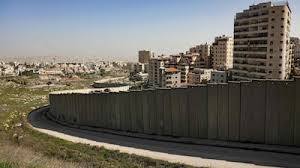
Israeli NGOs have raised the alarm over a settlement plan signed by the government which they say would mark the first expansion of Jerusalem's borders into the occupied West Bank since 1967.
Israel has occupied east Jerusalem since 1967 and later annexed it in a move not recognized by the international community.
Palestinians view east Jerusalem as the capital of their future state.
The proposal was published in early February as international outrage mounts over creeping measures aimed at strengthening Israeli control over the West Bank, which critics say amount to de facto annexation of the Palestinian territory.
The planned development, announced by Israel's Ministry of Construction and Housing, is formally a westward expansion of the Geva Binyamin, or Adam, settlement situated north-east of Jerusalem in the West Bank.
In a statement, the ministry said the development agreement included the construction of around 2,780 housing units for the Geva Binyamin settlement, with an investment of roughly 120 million Israeli shekels (around $38.7 million).
But the area to be developed lies on the Israeli side of the separation barrier built by Israel in the early 2000s, while Geva Binyamin sits on the West Bank side of the barrier and the two are separated by a road.
In a statement, Israeli settlement watchdog Peace Now said there would be no "territorial or functional connection" between the area to be developed and the settlement.
"The new neighborhood will be integral to the city of Jerusalem," Lior Amihai, Peace Now's executive director, told AFP.
"What is unique about that one is that it will be connected directly to Jerusalem, but it will be beyond the annexed municipal border. So it will be in complete West Bank territory, but just adjacent to Jerusalem," he said.
Aviv Tatarsky, a researcher at Ir Amim, an Israeli NGO focusing on Jerusalem within the context of the Israeli-Palestinian conflict, said the move amounted to a de facto expansion of the city.
"If it is built, and people live there, the people who will live there, they will be living there as Jerusalemites," he told AFP.
"In all practical terms, it's basically not the settlement that will be expanded, but Jerusalem," he added.
The development agreement was signed by Israel's Construction and Housing Ministry, the Finance Ministry and the Binyamin Regional Council, which represents settlements north of Ramallah in the central West Bank.
It has yet to be reviewed by the Civil Administration's Higher Planning Committee, in a process which could take several months or years.
Excluding east Jerusalem, more than 500,000 Israelis live in West Bank settlements and outposts, which are illegal under international law.
Around three million Palestinians live in the territory, which Israel has occupied since 1967.
