


Banks Association urges parliament to take 'free and courageous stance'
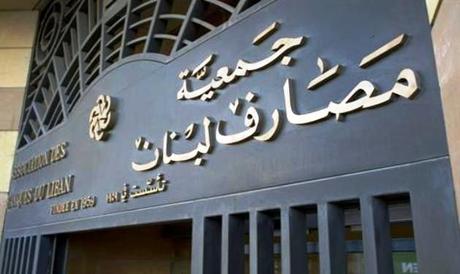
The Association of Banks in Lebanon announced Monday that the government’s draft law on financial regulation and deposit recovery was issued “without any serious study of the figures required for its implementation.”
“If it were serious, the draft law should have been preceded by determining the size of the deficit, how it will affect the Central Bank of Lebanon and the banks, an accurate assessment of non-performing assets, the amount of funds required to repay the various deposit categories, and verification of the availability of the necessary liquidity,” ABL added in a statement after a meeting.
“The argument that the draft law provides a framework for a solution is invalid, as those who provide a framework for a solution do not offer depositors guarantees that may not be possible to fulfill,” ABL warned.
It said that this comes at a time when the draft law is characterized by the Lebanese state's evasion of a clear acknowledgment of its debts to the Central Bank of Lebanon, despite “the proven nature of these debts, and its commitment to fulfill them."
“By repaying these funds and settling the deficits in the successive budgets of the Central Bank of Lebanon, in accordance with the provisions of Article 113 of the Monetary and Credit Law, the gap will be eliminated in favor of depositors,” ABL noted.
The Association also pointed out that “the Lebanese state is also the primary beneficiary of the crisis, as the currency devaluation has reduced its public debt from over ninety-two billion dollars to less than ten billion dollars in market value -- one of the lowest ratios in the world when compared to GDP.”
“Despite this, no one is calling on the Lebanese state to support the Central Bank and commercial banks, but rather to repay its debts and fulfill its legal obligations to the Central Bank, thus allowing for the return of depositors' funds,” it added.
It lamented that the draft law adopted a flawed approach by “immediately burdening banks with non-performing assets instead of first reducing them from the gap, as if its primary objective were to deplete bank capital, adopting whatever dictates suited it from the International Monetary Fund, while accounting standards (IFRS 9) and common sense dictate otherwise.”
“If this portion of deposits is non-performing, And it won't be recovered, so why burden the banks with it?” ABL wondered.
It accordingly called upon "all Lebanese, and especially the esteemed Parliament, to take a free and courageous stance that protects depositors first and the banking sector second.”
“Everyone must understand that there can be no economy without this sector, and no one should delude themselves into thinking they can replace it as easily as they imagine," ABL warned.


