


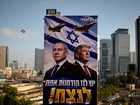
Israelis entered the final 24 hours of an intense election season on Monday, as reports circulated that Prime Minister Benjamin Netanyahu may have clashed with the Israeli military over initiating a possible escalation with Iran immediately before the vote.
Tensions flared over reports that Netanyahu and his military chief of staff disagreed over an instruction by the prime minister to carry out an "action" that the army worried could reignite the conflict with Iran. Netanyahu's office denied the report, first published by Israel's Channel 12, as "fake news."
 Full Story
Israel's elections Tuesday could mark the end of Prime Minister Benjamin Netanyahu's decades-long political career.
But his legacy in the Israeli-occupied West Bank — of massive settlement expansion, the displacement of tens of thousands of Palestinians and the empowerment of armed settler extremists — will likely endure, even if his opponents seek to rein it in.
 Full Story
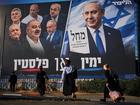
They will not govern Israel, but Arab-majority lists could be the kingmakers in Israel's close-fought elections next week, guided by a voter base fed up with Prime Minister Benjamin Netanyahu.
 Full Story
The United States appears to be preparing to resume large-scale strikes against Iran, but there is unlikely to be a military solution for either side in the devastating conflict, experts say.
 Full Story
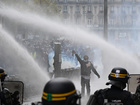
Police across France are under pressure to maintain security during further protests expected in some cities, while facing scrutiny over their riot-control tactics used during previous unrest that left some teenagers seriously injured.
Officers have appeared outnumbered and overwhelmed during last weekend's protests against rising living costs and poor conditions in schools. Authorities have announced police reinforcements ahead of further protests expected on Saturday, amid fears of renewed violence.
 Full Story
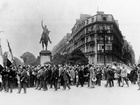
No nation does mass protests quite like France.
When the French fight high fuel taxes, they don yellow vests and march. When angry farmers want better pay, hundreds of them drive tractors down the Champs-Élysées. And when museum workers want better tourist management, they strike and shut down the Louvre.
 Full Story
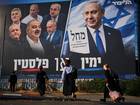
Israel goes to the polls on October 27 with results forecast to be close, meaning that the next government will be determined by whoever can cobble together a coalition in a fragmented political landscape.
 Full Story
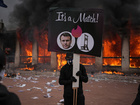
Rioters clashed with police, set cars on fire, stormed public buildings and engulfed a historic city hall in flames in France's worst civil unrest in years as violence and looting swept through major cities during nationwide protests.
About 2,400 people were arrested over the weekend, and authorities said thousands of businesses were damaged or looted. The rioting overshadowed demonstrations against rising living costs and poor conditions in schools in which hundreds of thousands of people marched peacefully.
 Full Story
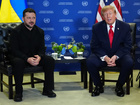
The U.S.-Ukraine alliance is careening toward a possible breaking point, with Moscow strengthened by President Donald Trump's recent rejection of new Russia sanctions and Kyiv undermined by disruptions in satellite support for its drones during the war.
Trump's relationship with Ukrainian President Volodymyr Zelensky has always been a moving target, while the Republican president has frequently boasted of his rapport with Russian leader Vladimir Putin. But relations between the U.S. and Ukraine appear to be at a new low, threatening to tip the balance of the war to Russia's favor and imperil America's security interests across the globe.
 Full Story
Mansour Abbas has done nearly everything Israel asks of its Palestinian citizens.
The leader of a small Arab political party condemned Hamas' Oct. 7, 2023, attack. He rarely speaks about the war in Gaza or Israel's occupation of the West Bank, instead focusing on local issues like crime. He broke a taboo in 2021 by bringing an Arab party into an Israeli government, in which he served as a loyal partner. This time around, the second-ranked member of his party list is a mainstream Jewish candidate.
 Full Story


