


The House speaker stood before Donald Trump during his first term at the White House and pointed a finger declaring that with this president, "All roads lead to Putin."
The stark assessment years ago from Nancy Pelosi echoed anew after Trump's surprise announcement last week that he struck a deal with Russian President Vladimir Putin to import tons of Russian diesel to the U.S. as a way to ease sky-high prices at the pumps for Americans ahead of the midterm elections.
 Full Story
The International Monetary Fund on Tuesday slightly upgraded its outlook for the world economy for this year, while warning of growing risks from rising debt, including borrowing related to artificial intelligence.
The IMF says it expects the global economy to grow at a 3.1% pace this year. That's up from its July forecast for 3.0% growth and well below the 3.5% expansion in 2025. Growth in 2027 should rebound to 3.4%, it said in its latest Economic Outlook.
 Full Story
China's passenger car exports surged 64% in September from the same month in 2025, an industry association reported Monday, as Chinese automakers increasingly focus on exports to drive growth at a time of sluggish domestic sales.
China exported around 919,000 passenger vehicles in September, lifted by overseas demand for plug-in hybrids and pure electric vehicles, data from the China Association of Automobile Manufacturers showed. In the first nine months of 2026, China exported more than passenger cars, up more than 70% compared with the same period last year.
 Full Story
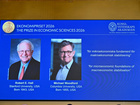
American-born economists Robert E. Hall and Michael Woodford won the Nobel memorial prize in economics on Monday for their work on models that have helped governments and central banks manage economic shocks, such as energy crises and inflation.
The Royal Swedish Academy of Sciences announced the winners in Stockholm, saying the two were being honored for work that has helped policymakers deal with economic fluctuations.
 Full Story
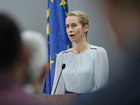
The European Union on Monday formally added almost 1,600 new individuals and entities to its sanctions blacklist over Russia's war on Ukraine, as it seeks to keep pressure on Moscow.
"This is the single largest expansion of our sanctions list since Russia started its war. Europe is again showing a united front. More than half are connected to the production chain for ballistic missiles," EU foreign policy chief Kaja Kallas said.
 Full Story
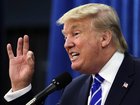
U.S President Donald Trump said that he has secured Russia's agreement for a major release of diesel, as he eased war sanctions on Moscow in a push to lower energy costs ahead of midterm elections.
 Full Story
Top Chinese and EU commerce officials reached an "understanding" on the trade of hybrid vehicles following closely watched talks on Friday, Beijing's commerce ministry said, citing a joint statement.
"After intensive consultations, the two sides reached an understanding on trade in hybrid vehicles in a manner consistent with World Trade Organization rules," the statement said, noting both parties would "continue with the relevant procedures concerning company price undertakings".
 Full Story
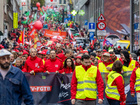
Police and protesters clashed in Brussels on Friday as tens of thousands of people rallied in the Belgian capital against rising living costs and budget-tightening measures introduced by the government.
Dozens of protesters, many of them young, dressed in black and wearing masks, threw rocks and firecrackers at police at the central Brussels railway station, before setting several fires, one to a pile of city bikes and electric scooters.
 Full Story
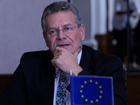
The top trade envoys for China and the European Union were wrapping up two days of talks Friday aimed at calming escalating tensions over growing imbalances between the two giant economies.
EU trade chief Maros Sefcovic traveled to Beijing saying it was crucial that the negotiations deliver "tangible outcomes" in rebalancing trade between China and the 27-nation bloc.
 Full Story
The European Union is capable of meeting demand for gas this winter but its reserves are at "historically low" levels and will need to be monitored, the ENTSOG operators' association said Thursday.
"Europe is entering the winter with historically low storage levels while observing higher and more volatile global gas prices" as the Middle East war disrupts supplies, but the bloc's "gas infrastructure remains sufficiently flexible to meet demand", the association said.
 Full Story


